Wednesday, May 8, 2013

Jobbed

 I don't usually jump on the "refs did it" bandwagon. Every fan base does that when they don't like the way a game turns out, and I've always thought it a little demeaning to do the same. Last night, though, it happened. Friends and I were watching Game Four...the most pivotal game in most playoff series...between the Canadiens and Senators. When Mika Zibanejad’s third-period goal crossed the line, the replay showed two things. First, that rookie Jarred Tinordi had made a rookie defenceman's error and lost his man on the open side of the net while poking at the puck instead. Second, that Zibanejad kicked the puck into the net. Everyone watching with me said, "That was kicked in." I agreed, but I also said, "The league is never calling that back." Sure enough, the goal stood and that decision led to the spiral of disaster that became the heartbreaking, backbreaking loss.

Lots of people are saying today the Habs lay back and allowed the loss to happen to them.  I disagree.
Every team, especially a beat-up team facing an air-tight goalie, is naturally going to want to cling to a two-goal lead. It's instinctive, and it will happen more often than not. That said, even though the Senators out shot the Habs in the third, they didn't have many real threatening chances. Canadiens were doing a decent job at moving the puck out of their zone and even kept it in the Ottawa zone for stretches, although they didn't get a lot of chances.

When the Zibanejad goal was kicked in...and it was...it set a slightly fragile team on edge. Still, they likely would have held off the Senators for the win without the repeated questionable icing calls and subsequent faceoffs that meant Plekanec, struggling in the circle, couldn't get off. I always understood icing would be called if a team shot the puck the length of the ice, out of reach of the opposing defence. Twice the Canadiens lobbed the puck out, and twice Senators defencemen glided gently along after it. Twice they could have easily retrieved the puck with a modicum of effort, and twice the linesmen called icing. Given enough chances to re-set the play with the man advantage, the Senators would have been pretty brutal if they didn't get a good chance.

The funny thing is, the reluctance of "classy" fans to point at the officiating when looking for the cause of a heartbreaking loss is so pervasive, we're looking to blame anything else. So, the team didn't take enough shots in the third. They had the wrong guy out for faceoffs. They couldn't clear the front of the net. They benched Galchenyuk (who, even his biggest defender has to admit is pretty lost in his own end, a LOT) for the third when they could have used a goal. All of those reasons for the loss are acceptable, but it isn't PC to say the officials played a part.

Well, they did. If that first Sens goal had been called back as it should have been, the rest of the whole disaster wouldn't have happened. If the Canadiens had somehow found another way to lose all on their own, that would be a different story. Last night, though, they had a lot of help from an increasingly weak group of NHL officials.

The loss would have been worse, marginally, if it had been the deciding game of the series. As it stands, without Carey Price, Brian Gionta, Ryan White and Lars Eller and with Max Pacioretty very likely nursing some kind of debilitating injury, the bell is tolling for the Habs today. They may take Game Five at the Bell Centre tomorrow, or they may be completely out of gas. Either way, it's not likely they'll pull off three wins in a row at this point. The win they should have had last night would have given them some life, even with the injuries they face. Now, the Habs playoffs are on life support.

It's not cool to blame the officiating for your team's losing a big game these days. I don't care. The Habs got jobbed.

Monday, May 6, 2013

Goon Show

More fingers are pointing at the Canadiens today than Andrew Ference sticks up at opposing fans when the Bruins are winning. Everyone's got a pet theory about what happened to completely take the Habs away from their game and fall into the trap of attempting to play someone else's. So, today, there are many explanations for why the small, fast Habs tried to out-hit and out-tough a bigger, stronger team. Everyone's trying to pinpoint the minute the Canadiens rolled over and gave up that pivotal game.

A lot of those pointing fingers and weary explanations are directed at Carey Price. Craig Anderson has been very strong in the Senators' net despite facing more shots than Price. The Canadiens goaltender needs to be at least as good if the Habs are to have a chance in this series. In Game Two, he was spectacular. In Games One and Three, not so much. That's why some deconstructionists are saying the tide turned at 1:18 of the third period, when Price whiffed on a clear shot by Senators rookie Jean-Gabriel Pageau. That gave Ottawa a two-goal lead that must have seemed insurmountable with the way Anderson was playing. It was all downhill from there.

Other Monday morning critics look instead at the first goal of the game, at 5:58 of the first period with the Habs two men down. That, many believe, was emblematic of the indiscipline that marked the beginning of the Canadiens collapse. Certainly, penalties...many of them stupid...played a big part in the result of the game.

Perhaps, though, the real catalyst of the team's melt-down happened before any of that, and was the result of a penalty that wasn't called. Nineteen seconds into the game, the Canadiens P.K.Subban held the puck just behind his own blueline, and was looking for a passing option. The Senators' Erik Condra bore down on Subban, crosschecking him in the head and knocking him to the ice. It was a questionable hit at the very least, but play continued without a whistle. From that moment on, Subban and the Canadiens were thinking more about hitting back and getting even than they were about skating and speed.

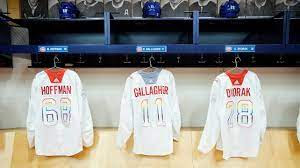
The Senators aren't stupid. They know Subban and Brendan Gallagher are the emotional hearts of the Canadiens. Both players were targets last night, but their responses were very different. Gallagher just kept playing his game as hard as he could. Subban fell into the Ottawa trap. While the Senators were penalized twice in the first period for attacking Gallagher, Subban took his first minor of the game at 12:04 of the same frame. He was called twice more in the second, for high-sticking (a bizarre, after-the-fact penalty on the first Pageau goal that should have been a delayed call and thus negated when the puck went in) and for hooking. At 8:31 of the third, he finally lost it and pummelled Senator Kyle Turris. He ended up getting a fighting major, double minor and, almost mercifully, a game misconduct. In between his trips to the box, Subban was visibly frustrated and fell back into old habits of trying to make dramatic stretch passes and end-to-end rushes. While entertaining, the showy Subban is not the most effective Subban. By successfully taking him out of the game, the Senators removed one of the Canadiens' most important weapons and, in doing so, set a tone.

Subban was frustrated and angry, as evidenced by his completely out-of-line public lambasting of teammate Max Pacioretty on the bench, and so his teammates became. When a player is as involved as Subban, it's hard for his emotion to be contained. Michel Therrien, for all his useful passion in the first two games, lost control of the mood on his bench as well. He needed to call his time out and get his players, particularly Subban, back on track before it was too late. He didn't.

Ultimately, the greatest failure lay with the officials in that game. If the correct call had been made on the head shot to Subban on the very first shift, the referees would have sent the message that targeting certain players would not be tolerated. Subban might have felt justice had been served and he might have kept a better leash on his temper. Instead, the play went uncalled and the Habs, Subban first among them, embarked on a doomed mission to find their own vengeance.

Subban is a franchise defenceman. If he's not playing his game, he's not effective and becomes a pawn of the opposition. He's got arguably as big an impact on the team and its fortunes as Price does. How those guys go, so go the Habs. Last night, Price was soft and Subban angry, and that is the identity their team wore. They have to realize the reffing is terrible and rise above it. If they and the Canadiens sink into the mud, they'll soon suffocate. They have a day to recognize the truth of that. In the meantime, they'll find themselves the targets of a lot of fingers.

Saturday, May 4, 2013

Head Games

The Stanley Cup playoffs are defined by many things. They're fast, they're exciting and they're high stakes. They feature games in which players spit out their teeth, calmly hand them to the trainer and keep going to turn in the best post-season performance of their lives. There's no doubt the Cup is the toughest trophy to win in pro sports, and the games are a test of endurance, toughness and strategy as much as they are of pure skill.

There are a couple of Stanley Cup cliches about how to win playoff games. Number one, they say, is to have superior goaltending. When all other things are equal, or even if one team's an underdog, a hot goalie can steal a game or more. Number two, according to the experts, is that defense wins championships. A solid D can shut down the best players in the world. We know cliches are true for a reason because we've seen Patrick Roy, Jose Theodore and Jaroslav Halak steal playoff series for the Habs. And we saw what happened to Sidney Crosby and Alexander Ovechkin when the Habs defensive blanket covered them up.

Perhaps undervalued in the lexicon of playoff advantages is the impact a coach can have. It's not so much in terms of systems or in-game adjustments, although those things matter. However, once the playoffs arrive, there's not much a coach can do to alter the patterns and habits installed throughout the season. No, at that point, the coach's role is different. Instead of being the guy who calls out the room or bag-skates a team after a bad game, or who calls an unwanted Sunday practice to work on the power play, he becomes an emotional bellwether. Players look to the coach for direction in what can be highly-charged games with very big consequences.

So, while the goaltenders in the Ottawa/Montreal Northeast Division quarter final have each had an excellent victory and the defense for each team has registered a win, Michel Therrien is beating the emotional pants off   of Paul MacLean.

MacLean's "we're the poor underdog" routine before Game One was disingenuous and a disservice to his players, who fought hard all year to remain relevant. Therrien indulged in no such theatrics. He calmly said his team would rely on good goaltending and solid team play and would keep the style that got them to where they were. Therrien came across as being calm and professional. MacLean looked like his guys needed a reason to get pumped.

MacLean really lost his credibility as an emotional manipulator, however, after Game One, and the devastating hit on Lars Eller that left the Habs player bleeding and unconscious. Rather than take the high road and say it was unfortunate to see a player hurt, or he'd wait to see what the league decided, he decided to blame Canadiens Raphael Diaz for making the pass Eller was receiving when he got hit. Not only that, but in pretending he didn't know exactly who'd been hit or "Player 61's" name, he look like a smug, rank amateur. That's when Therrien ate him for lunch.

His reaction was masterful. He talked about how he was so hurt inside to see a fine player like Eller bleeding like that. He got angry when asked about MacLean's comments, but refused to stoop to  his level and talk about blame on the hit. He was the soul of the righteous wronged and he set the emotional tone for his team. (His reaction may also have had something to do with Gryba's two-game suspension, but we'll never know for sure.) Make no mistake, if Brandon Prust wasn't following the lead of his coach, he would never have felt free enough to call MacLean a "bug-eyed fat walrus." Therrien's show of emotion allowed his players to react with passion as well, and that gave them the mood they needed for Game Two.

With the absence of not only Eller, but Max Pacioretty and captain Brian Gionta as well, the Canadiens needed to rely on the scrubs to take their places. Those are players who need an emotional touchstone to play their best. Ryan White needed a chance after his over-the-edge play cost the team earlier in the year, and he needed the coach to have patience and faith in him. Therrien provided both, and he also gave White the charge of passion he needed to play his best game in the NHL. Jeff Halpern, Colby Armstrong and Gabriel Dumont are loyal soldiers who react well to the feeling that they're fighting in the trenches. With his words and actions, Therrien gave his team someone to rally around, and helped create the feeling he wants his players to carry onto the ice.

It may not be a playoff cliche that among coaches the best emotional manipulator wins, but that's what happened last night. Therrien, having learned from going too far in the past, has become a master. MacLean may win coach of the year, but Therrien knows a few tricks the Walrus still can't pull off.


Wednesday, May 1, 2013

Dear Mr.Molson

Dear Geoff (can I call you Geoff?),

I have loved the team you own for a very long time now. I've loved it for more years than I lived before knowing it. My first sports hero was Patrick Roy, and my first sense of the vicarious thrill of fandom was courtesy of the 1986 Stanley Cup champions. However, since the Canadiens last won the Cup in 1993, things have gone horribly wrong for this great franchise.

I'm not sure what started it. Perhaps it was trading the team's last Hall of Fame player in a fit of anger, or leaving behind the Ghosts of the Forum. Maybe it was the hard economic times in the early part of the century that necessitated the purging of expensive salaries and the talent they attracted. Or maybe it was just the harsh reality of mediocre management getting taken to the woodshed in a league full of cutthroat winners. Whatever the cause, the Canadiens lost their identity.

Last season was the basement floor, both emotionally and in the standings. Something was obviously very wrong within the culture of the team as determined by those in upper management, and the on-ice product reflected that in its dispiriting last-place finish. For the first time in many years, I couldn't watch the ends of games. Sometimes it was hard to even watch their beginnings.

After the season mercifully came to an end, I didn't even care about the looming months without hockey. I honestly expected yet another endless five-year rebuild, considering the paucity of stars in the prospect pool and the number of expensive locked-in contracts on the NHL roster. As it turns out, I underestimated the willingness of a team owner, who is also a devoted hockey fan, to strip the organization down to its bones.

You could have sat there, cashing cheques, knowing the seats in your rink would be full for hockey games no matter how well or how badly the team performed. Some people might have turned away from a poor team, but just as many more would still show up for the hype and the spectacle. You could have let Pierre Gauthier continue along the secretive, alienating path he walked for six years. You could have watched Scott Gomez smirk his way through another season and kept the money you had to pay him to go away.

Instead, you went out and found the best possible person to renew the team's reputation for class and smarts. In Marc Bergevin, you hired someone who knows the game from the inside and who understands the intangible elements of success that go much deeper than just the physical talent available. Even more importantly, you knew enough to stand back and let him do his work. As a fan yourself, I'm sure the temptation to weigh in on hockey matters must have tickled the back of your mind sometimes. You resisted being a butt-in owner and trusted the judgement of the people you hired to make the right decisions.

So far, the turnaround has been more rapid than anyone could have expected. The people who work for you are making sure the Montreal Canadiens are a fun, exciting team again. They're proud of wearing the CH again. They may not win every game, and they may not go very far in these playoffs, but they are once again giving us hope that we'll see a 25th Stanley Cup in Montreal before we die. Right now, that hope is the best thing you could give to fans who were pretty darn depressed about what had happened to the team.

I want to say thanks for bringing in the right people and giving them room to work. And, thanks for loving this team as much as I do.

Go, Habs, Go!

Sunday, April 21, 2013

Playoff Ready

Well, friends, it looks like the Habs are rounding nicely into playoff form. In fact, having lost four of their last five with only three games to go, they could even be primed to bring home the franchise's 25th Stanley Cup. Okay, that sounds ridiculous with the way this team is playing right now, obviously. However, a quick look back at the last two Canadiens championship teams shows an encouraging pattern.

In 1985-86, the Habs stumbled down the stretch with a 3-6-1 record in their last ten games, with little hope of playoff success, a room divided between rookies and veterans and a goalie controversy. They were four games under .500 for the months of March and April, including a six-game losing streak. In no way was that team expected to win the Cup.

Then, in 1992-93, the Canadiens went 4-6 in their last ten, got outscored 36-24, were shutout twice and generally looked like a one-and-done playoff team. After losing the first two games against the Nordiques, nobody would have bet on what happened after that.

So, here we are again, with the playoffs looming and the Habs struggling. Common sense says the team is finally hitting the mat after having punched above its weight for 40 games. It's hard to believe a squad that finished 15th in the East last year and now is near the top of the conference has really made such a drastic turnaround in just one season. The whole year has had the ethereal feel of cotton candy: substantial on the stick, but barely a mouthful of melted sugar when you taste it. It was just a matter of time before the Habs meltdown happened, say today's sensible observers.

Not so fast, though. While we're asking ourselves what the hell has happened to Carey Price, the defence and the tenacious forecheck the team used to have, we need to remember the things that brought the Habs to this point are still there. There are no magic bullets for this year's Canadiens. They don't boast a superstar without whom they'd be lost. Everything they accomplished this season has been through hard work, team play and determined, relentless skating. Those things aren't irretrievably lost because of a few losses.

What we've seen in the last six games is the letdown of a team that was busting its butt to redeem itself after last year by getting back to the playoffs. Once it accomplished that goal, quite convincingly, against the Sabres back on April 11, they collectively relaxed and breathed a sigh of relief. Unfortunately, they forgot that if they aren't first on loose pucks, they risk exposing their rather shallow defence and their good-but-not-spectacular goaltender to more shots and better chances. If they don't buzz the offensive zone with three aggressive forwards, pushing their opponents back on their heels, they get pushed around themselves. If the forwards don't come back to help the D out, the defencemen are left with few breakout options for turning the play back the other way. They make low-percentage long passes, easily intercepted by opposing forwards. If they don't use their one deadly weapon...their speed...to its full advantage, they look very ordinary and not much of a threat.

The results of the last six games prove those unsettling facts. Why the Habs continue to make the same mistakes is the part that's tough to understand. Maybe they're more beat up than they're letting on. Perhaps the loss of Alexei Emelin and his physically-intimidating play has stolen some of their swagger and emboldened their opponents. Or perhaps it's the compressed schedule that preempted proper practice time. Maybe it's just the subconscious acceptance of having accomplished their first goal and the mental regrouping they need to do as they approach their second goal in the post-season. Whatever the reason for the current slide, it's far from unfixable. The Canadiens got where they are with a very simple approach, and they'll need to get back to those basics to recover their equilibrium.

One thing we, and the Habs, know is that the playoffs are a whole new beginning. That's why the eighth-place LA Kings were world beaters last spring. It's why a powerhouse Bruins team was beaten by the underdog Habs and rookie goalie Ken Dryden in 1971. And it's why the '93 and the '86 Canadiens struggled down the stretch in the regular season, then found new life in April. Once you're in, anything can happen. The Habs are a long way from dead, even if it feels like the paramedics are en route to the Bell Centre. For those of us who've seen this act before, some might say they could be getting ready to surprise a lot of people.

Wednesday, April 17, 2013

Goalie Controversy

There are a lot of panicked Habs fans this week, looking sideways at each other and whispering "pssst...wanna buy a goalie?" Carey Price's nickname should be The Pendulum. When he's winning games, critics talk about playoffs and Vezinas. When he's not...especially when he's losing spectacularly as he has in his last two (and five previous this season) starts...he's suddenly a dud who might bring a nice return if Oilers' new GM Craig MacTavish can be duped out of trading a young stud for him.

The truth, as it usually does, falls somewhere in the middle. Carey Price is a very good goaltender. He's technically sound, by all accounts he's a hard worker and he usually will make enough big saves to give his team the chance to win. On the other hand, Price tends to have enough stinkers to skew his numbers and keep him out of serious recognition as a top-tier goalie in the NHL. This year, for example, Price has had eight games out of his 34 starts in which he's allowed five or more goals. All ended in losses, excepting the bizarre comeback against Boston after Peter Budaj replaced him. To make a comparison with a truly elite goalie, the Rangers' Henrik Lundqvist was Price's age in 2008. He gave up six goals twice and five goals three times over 72 games. He was a Vezina finalist that year, his third in the NHL. Price is in his sixth season and has never quite found that consistency from game to game or season to season.

Of course, comparisons of that kind don't serve a great purpose and they're too easy. They don't make allowances for the different cities, coaches or teammates, or different levels of maturity, physical health, innate talent, practice habits or mental strength that make each player his own man. Carey Price isn't Henrik Lundqvist. He's Carey Price, for better or for worse, and that's why there is a goalie controversy in Montreal.

The controversy isn't about whether Price or Budaj should start the next game or the first playoff game. It's not about whether Price or Jaroslav Halak should have been traded in the summer of 2010. Everyone, even those who passionately argue revisionist history, can accept the idea that Price has been much more durable, and therefore, more reliable, than Halak since the trade. The controversy isn't even about the idea that the Canadiens erred in choosing Price fifth overall back in the 2005 draft anymore. These days, Montreal's goalie controversy is between good Carey Price and struggling Carey Price.

When Carey Price is good, he exudes an aura of calm competence. He's quick, in position to face the puck, and to challenge shooters. He handles the puck well. He is, in many ways, a third defenceman and the anchor of his team's defence.

Struggling Carey Price is deep in  his net, loses his focus on the puck, lets weak floaters and squeakers through at the worst possible times and is visibly frustrated with himself. The thing is, every goaltender has a meltdown version of himself. So does just about every other player at every other position who slumps on the scoresheet or in the plus/minus department. They just don't look as bad.

The problem, as former Habs coach Jacques Demers so suscinctly put it, is that it all starts with goaltending. Teams take their mood from the goalie. If he's looking sharp and confident, the team will respond and let him do his job. If he's juggling the puck and looking behind him, his body language tells the team he's not ready. Then the defencemen start scrambling, trying to cover up in their own zone and help the goalie out. The result is chaos.

What Demers didn't say when talking about what it takes to win is that while it might all start with the goalie, the goalie is just a member of the team like everyone else. If Josh Gorges blows coverage or Andrei Markov pinches deep and can't get back, their mistakes cause goals against. When enough of those mistakes turn into goals, the score runs up, the goalie gets pulled and the pendulum of public opinion in the goalie controversy swings.

There's no question Carey Price is the struggling version of himself right now. The timing isn't great with only a handful of games left before playoffs. When Peter Budaj gets the start against a powerhouse like the Penguins, it creates unwanted doubt at a time when things should be coming together for the real season. Michel Therrien may be trying to shock Price out of his slump, because it's not encouraging to watch the guy you're counting on to bring you to any sort of post-season success playing like Hardy Astrom.

That said, Gorges isn't having a great time lately either. Two regulars on defence are missing, replaced with a green rookie and a guy who couldn't make the team in his last NHL home. Brandon Prust is playing hurt, David Desharnais and Max Pacioretty score as often as an 80-year-old nun and Travis Moen has been MIA all year. The team's motto is "no excuses," but those facts do actually have an impact on how the team performs. Carey Price is the one who takes the lion's share of the blame, but he's not alone.

Price needs to be better, but the team around him needs to pick it up as well. Blaming the goalie for everything is both myopic and unfair. Price may or may not come out on top in the "is he or isn't he the real deal" goalie controversy. The only way he can answer the question is to stand up in the playoffs and prove himself. Critics need to be silent and allow him to do that.

In the end, Price may meet the challenge and end the goalie controversy this spring. If he doesn't, there may be a real reason to suspect he's actually little more than an above-average goalie with slump problems. Right now, he's 25, he's got six years and five playoffs in the NHL, and the test he's facing will label him, one way or the other, in eyes other than those constantly focusing on the Habs. A lot of fans aren't ready to trust him yet. It remains to be seen if his teammates do. Whatever happens, the pendulum will be weighted heavily to one side or the other by June.


Tuesday, April 9, 2013

Reality Check

Last weekend, at a provincial music competition, a 13-year-old boy with a special talent dazzled the audience with a fabulous rendition of an étude by Chopin. His parents looked more nervous than he did, clenching their hands and nodding along in intense concentration. They needn't have worried. Their boy was flawless and took his bow with a smile of pride and relief. Then the next competitor took the stage. A 14-year-old kid from another town, his parents just as nervous and excited, his suit looking just as fresh-from-the-hanger, slid straight-backed onto the piano bench. As his hands hovered over the keys, awaiting the adjudicator's nod, the mother of the first competitor leaped to her feet and yelled, "Get off the stage, you bum! You suck!" She then proceeded to hurl epithets at the judges.

If that seems shocking and unbelievable, it's because it didn't really happen. There was a competition, and there were young people competing for musical honours. The parents, though, listened respectfully and afterwards applauded each other's children, congratulating them for their hard work and fine performances. After all, what sane parent would deride another's child in a public competition.

What really did happen last weekend was a championship hockey game. The kids were bantam age, 13-15 years old. The game, right from the outset, was rough with lots of hitting. There were two problems. First, a lot of the kids involved had never been taught to bodycheck properly. They were charging, boarding and hitting their opponents in the head. One kid emerged with a concussion after being run.

The second problem was the officiating. Despite the borderline hitting, there were no major penalties called. One team began to get bolder, taking further liberties. The other began to react out of frustration, hitting back. A young and relatively inexperienced linesman compared what he'd been taught about the rules (including a no-tolerance, automatic penalty policy for hits to the head, even through incidental contact) and what was actually going on during the game, and he skated off the ice, quitting the game several minutes before the final horn sounded. He'd been asking the ref to crack down and take control, but got no response. So, fearing a serious injury for some player, he called it a night. And all the while, parents from both sides were yelling and berating both the officials and the opposing players. That played a role in the linesman's decision to walk away as well.

There is something significantly the matter within minor hockey in this country. Parents who would never dream of screaming at a child playing the piano on stage think nothing of doing the same thing to children on a hockey rink. Some parents (who are often the coaches as well) think the four walls of the hockey arena places their behaviour somehow above the rules of civility and decency we expect to govern our actions in the rest of our lives. The question is why this happens.

Going to the source, you get various answers from parents. Some say it has to do with the accessibility of the pro game to kids and coaches. Whereas, not so many years ago, the NHL was something kids secretly dreamed about while they watched their heroes on Saturday nights, now every big-league game is easily available on TV. Young players see guys from their own town, or the next town over, making it big and their dreams change from simple childhood fantasies to serious career plans. Many times, the change is fostered by the parents who dream NHL dreams even before their children are old enough to do the same.

Other parents say they get carried away by the emotion of the game or the behaviour of opposing teams. They get angry if they think their kids are being shafted by bad officiating. Sometimes tension builds and tempers fray. Recently, I spoke with Fred Greening, whose son, Colin, plays for the Ottawa Senators. He told an amusing story of sitting with parents who were getting a little too wrapped up in the politics of minor hockey ice time and coaching. Greening (who marvels at the idea of putting pressure on kids about hockey) said, impatiently, "Listen, none of these kids are going to make the NHL anyway, so why does everyone get so worked up?" He might have been off-base about his own kid, ironically, but the sentiment was honest. Most boys never come close to an NHL career, but they can learn co-operation and teamwork and make life-long memories if they're let play the game for fun.

The result of bullying behaviour from the stands and behind the benches...and even inadvertently from "old school" officials who say they don't want to interfere too much and "just let them play"...should be a real worry for Hockey Canada. Players are leaving the game because their parents don't want them to risk injury, or because they abhor the ridiculous behaviour of others in the stands. They're leaving because the players themselves have had enough and don't like the feeling of playing with fear, or the frustration of coping with unchecked violence that prohibits them from playing a more skilled game. They're turning to soccer or basketball, or music video games or art instead. A Toronto Star article published last January says only 572 000 kids were registered in minor hockey, down 200 000 from its peak. Officials anticipate losing another 200 000 in the next decade. Some cautious parents aren't signing kids up for hockey at all. Others are leaving the game after they witness some of the behaviour in the rinks.

An even more serious problem might be with the young officials involved in these games. They are often players or former players who decide to try their hands at reffing or working the lines for a change of pace and a few bucks. They take the time to train for the role, and they usually work the games under the guidance of an experienced official. It's tough enough for them to follow the game, remember all the rules and react appropriately without dealing with the rage from the stands. Any provincial hockey association will tell you it's not a problem to attract young officials and train them. The difficulty is in keeping them. The Calgary Minor Hockey Association says a typical year sees a 50% turnover in its referees. A third of all minor hockey officials in New Brunswick quit each season. In Saskatchewan, about 40% of their officials throw in the towel every year. In almost every province, the number-one reason given by those who quit is the seriousness of verbal abuse from the stands and from coaches.

The constant turnover of officials hurts the game. It means the more experienced referees and linesmen needed to control the games of teen aged players are getting fewer, and many of those quitting are high-quality officials. That can leave younger, more inexperienced or not as talented people in charge of games that can get out of hand without firm enforcement of the rules. In BC, in 2005, three young refs quit because of threats of physical violence from the stands. After that, for every 50 new people joining the officiating ranks, 50 older refs and linesmen quit. The problem isn't going away.

The young linesman in this story was ready to quit hockey entirely when he left the ice on the weekend. His referee disappointed him by letting too much violence go unpenalized and by losing control of the game. He told parents he was sickened by what was happening on the ice and in the stands. Now, his minor hockey association is trying to convince him to give it another shot in an effort to keep a promising young official in the system. He may or may not decide to stick around.

Parents and coaches screaming at a hockey rink need to stop and listen to themselves. Then they need to ask whether they'd stand up and shout what they're saying to a young opposing hockey player or official on the ice to a performer in the middle of a concert hall. If they wouldn't, they need to sit down and shut up. Their big mouths and ridiculous behaviour are driving young people away from the game, and hockey can only be worse for that.